The Courage to Stand on a Desk: The True Meaning of ‘People Over Process’ in Agile
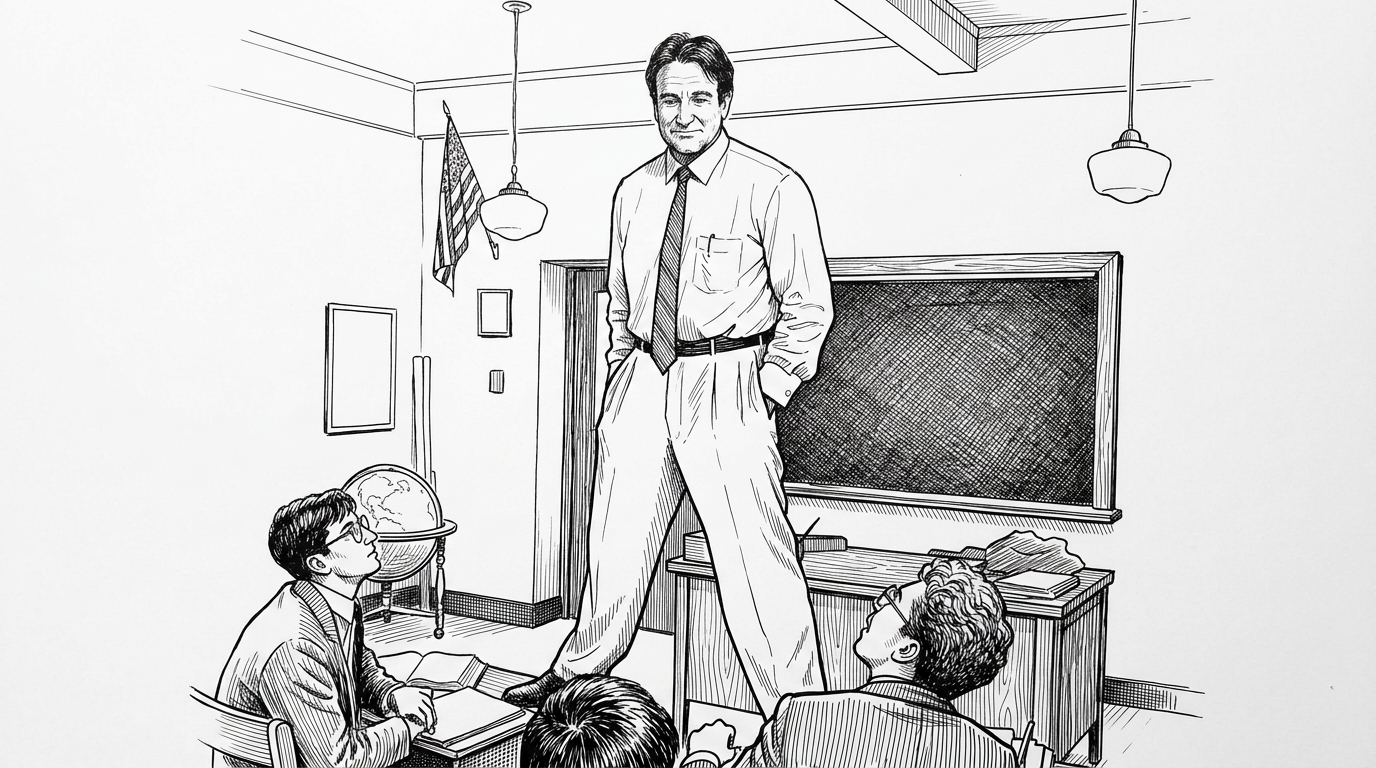
In the classic movie Dead Poets Society, there is one scene that stays etched in our minds above all others. It is the moment when Mr. John Keating invites his students to step out of their seats and stand atop his teacher’s desk.
“I stand upon my desk to remind myself that we must constantly look at things in a different way. Just when you think you know something, you have to look at it in another way. Even though it may seem silly or wrong, you must try.”
When you stand on a desk you’ve sat at every day, the familiar classroom landscape and the elevation of your perspective change entirely. The moment you look at everyday rules and environments with fresh eyes, you finally break free from familiar inertia, and new questions begin.
Working across various projects and business execution fields, this is a scene I frequently recall.
Working for the Tool: Why Is the Team Exhausted Despite a Clean Kanban Board?
When observing organizations embarking on Agile transformations or improving their Way of Working (WoW), one often witnesses a bizarre scene where cause and effect are inverted.
They adopt Jira, run two-week sprints, and invest massive time and capital tuning ticket status definitions. Cards on the Kanban board move according to the rules, and burn-down or burn-up charts look reasonably impressive. Yet, as deployment and release dates approach, team members burn out, and the final deliverable settles at a level that satisfies no one.
Why does this happen? Because the organization became obsessed with matching tools and procedures rather than focusing on the essence of the work.
While updating ticket statuses and tidying up boards, teams skip 5-minute casual chats that could solve bottlenecks—missing where a colleague next to them is stuck, or whether the original product intent went astray during execution. As processes grow complex and formats solidify, people begin to hide behind those rigid frameworks.
Re-examining the First Line of the Agile Manifesto
In 2001, when 17 software practitioners gathered to draft the Agile Manifesto, the very first line they wrote was:
“Individuals and interactions over processes and tools”
This does not mean processes or tools are useless. In complex organizational environments, minimal standards and tools are essential. However, the moment tools dominate the center of work, they cease to be helpful levers and become shackles holding the team back.
It is identical to Mr. Keating asking his students to rip out the textbook’s introductory page—which graded a poem’s greatness by plotting perfection and importance on horizontal and vertical axes to measure its area. Just as feeling and reading the poem matters before quantifying its format, executing goals requires honest, face-to-face dialogue and mutual trust with colleagues over software screens first.
Three Questions to Stand Your Team on a Desk
When you feel that process is suffocating your people, here are three essential questions teams and leaders must ask:
① Is the Meeting to Follow Rules, or to Solve Problems?
If the Daily Standup has devolved into a status report where people merely recite “what I did yesterday and what I’ll do today” to a manager, that meeting has lost its soul. What truly matters is whether team members feel comfortable expressing, “Here is where I am currently blocked, and whose help do I need?”
② Are Tools Becoming Walls Between People?
Be cautious if, before initiating a simple conversation with a colleague sitting right next to you, the default response is, “Please create a Jira ticket first.” Version history management and transparency are vital, but they should never become formal barriers obstructing face-to-face communication.
③ Is There a Culture Where Mistakes Can Be Shared Early?
Stepping onto a desk can feel awkward and silly. When a teammate tries a new approach and fails, or encounters unexpected variables, genuine collaboration occurs only when the culture focuses on solving the problem together rather than reprimanding them for breaking a rule.
What Becomes Visible When You Shift Your Perspective Slightly
Stepping onto a desk does not magically resolve nagging execution challenges on the ground. Tight schedules remain, technical debt persists, and requirements will continue to shift unpredictably.
However, when you shift your perspective slightly to look at your team, the genuine challenges and hidden potential of team members—previously obscured by prescribed processes—begin to emerge.
Tools can be swapped, and processes can be adapted to fit the team’s context. However, once trust and communication fracture within a team, no expensive tool on the market can restore it.
Are we leveraging tools to empower our work today, or have we degenerated into mere managers of tools? Take a moment today to step away from your monitor, grab a cup of coffee with the colleague beside you, and engage in the conversation that truly matters.