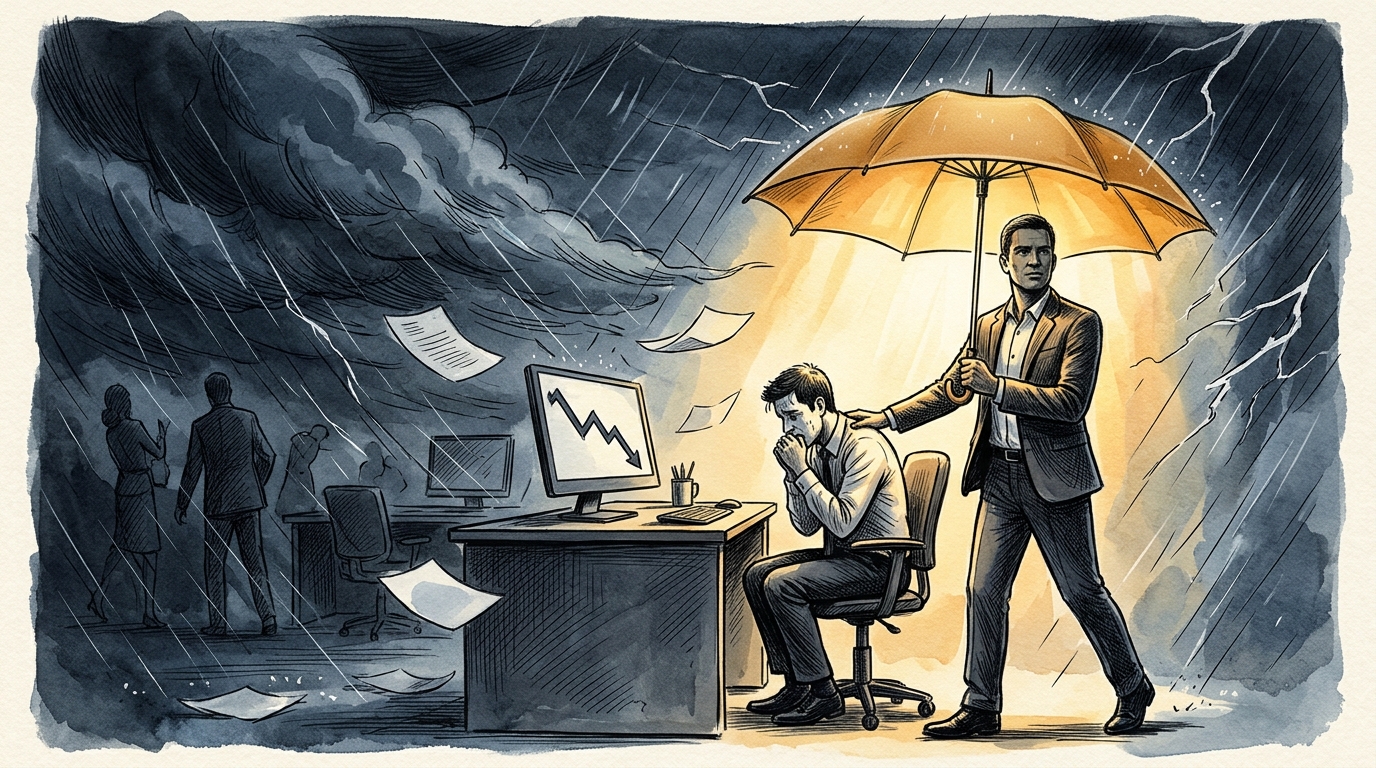
When things are going well, leadership is rarely visible.
When results are coming in, schedules are met, and the atmosphere is pleasant, who did what does not seem to matter all that much.
The real test always comes right after.
When a mistake happens, when plans go awry, and when someone has to take responsibility.
In that moment, attitude speaks louder and faster than words.
Everyone can see who rushes to make excuses, who holds their tongue, who calls out names, and who quietly steps back into the shadows.
What Is Remembered Longer Than Meetings or Emails
The attitude a leader shows when things go wrong stays in people’s memories far longer than anything said in a meeting or written in a polished email.
In those moments, team members naturally form their own conclusions:
– How mistakes are treated in this organization
– Where conflict flows when pressure rises
– Whether responsibility moves upward or falls downward
Leadership becomes unmistakable not through well-explained principles, but through a single choice made in a difficult moment.
“Leadership is proven not by eloquent principles shared in calm weather, but by the direction responsibility flows when things go wrong.”
Whether the leader protected someone or drew a line first, whether they stood firm together or kept a safe distance—people watch that choice closely and remember it as it is.
That Day’s Choice Becomes the Next Standard
That choice might not look dramatic on the surface. Yet it remains as an unmistakable standard within the team. And the next time a similar situation arises, it becomes the very benchmark that determines how people choose to act.
In places where responsibility always falls downward, people hold back their words and play it safe. Conversely, in teams where a leader has stood alongside them through difficult moments, people do not hide problems when they arise; they bring them forward quickly to find solutions together.
“Leadership reveals itself without pushing people into a corner, and it endures without needing to be spoken aloud—especially when things do not go as planned.”
When was the most difficult moment you faced recently?
And when that moment passed, what remained within your team?
When an unexpected setback occurs, does your team’s attention turn toward ‘who made the mistake’ or ‘how we will solve this together’? The direction of responsibility a leader chooses in a crisis becomes the standard that defines psychological safety and future action.